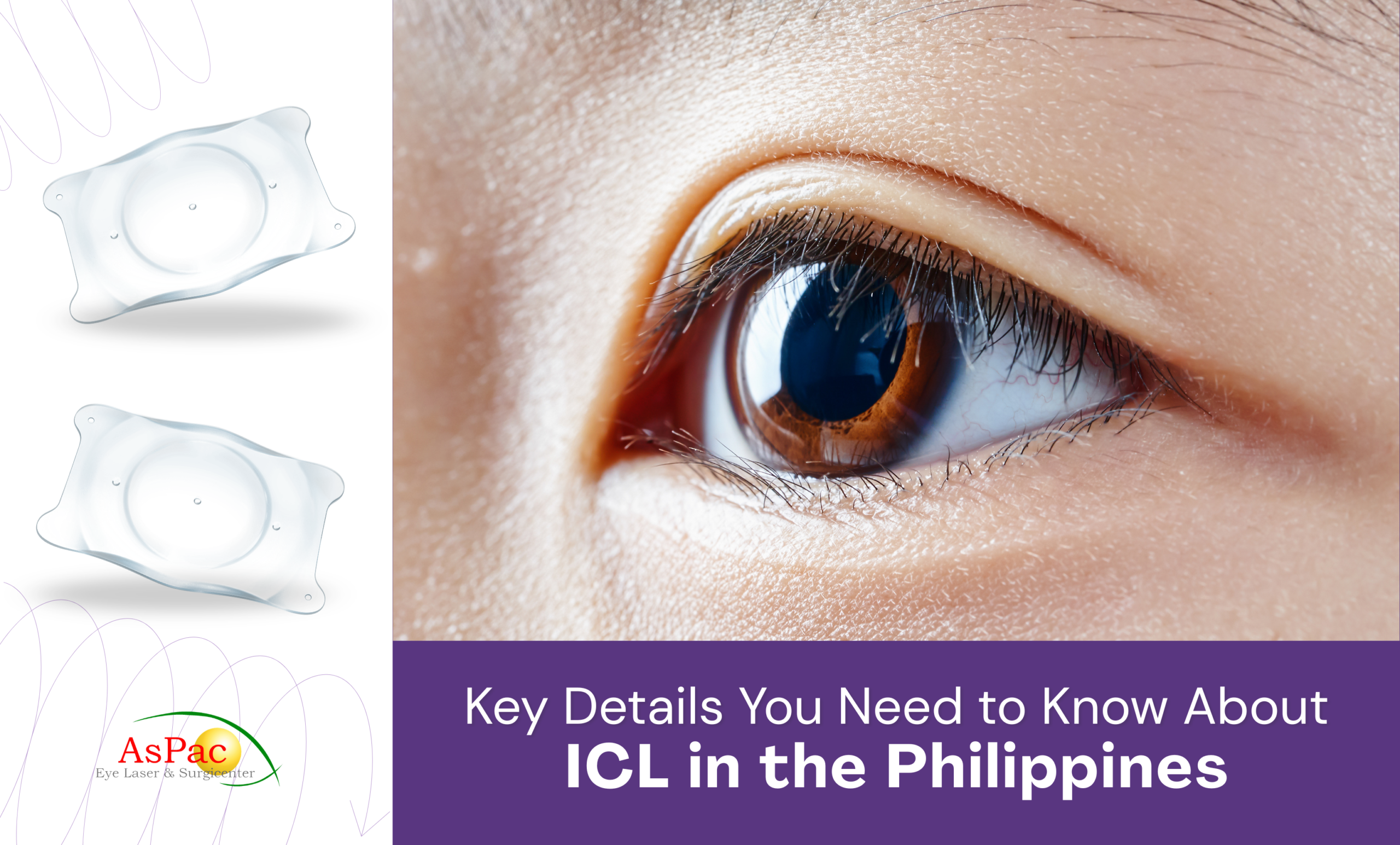
Implantable Collamer Lens, or ICL eye surgery, is a procedure that corrects refractive errors like myopia, hyperopia, and astigmatism in patients. Individuals who are not good candidates for LASIK or PRK will most likely be referred for this. It is a quick and laser-free procedure, where a special lens is inserted into a small incision in the eye. Most patients recover and resume a normal routine after just 1 to 3 days, the same as with laser eye surgery.
If you are researching ICL as an option to correct your vision, here is some key information you must know before booking your diagnostic eye exam.
All You Need to Know About ICL Eye Surgery
What are Implantable Collamer Lens?
ICL is a unique lens placed in between your natural lens and iris. It is an efficient alternative to LASIK and PRK, particularly for patients with very high levels of refractive errors.
For this group, ICL produces better results and functionality because there is no need to remove great amounts of tissue from the cornea. That’s what makes it a safe, practical option for long-term vision correction.
ICL Eye Surgery: A Laser-Free Procedure
ICL eye surgery does not use lasers. The excimer or femtosecond lasers primarily used in LASIK and PRK create flaps and reshape the cornea. On the other hand, implantable collamer lenses only need a special blade. Your eye doctor makes a minuscule incision, through which the lens will be inserted.
However, there are cases when an eye clinic uses advanced laser technology to make the incision. It is best to consult with your ophthalmologist on the tools they use.
What Makes ICL Lens Special?
Biocompatible and lightweight material
An ICL lens is rectangular, translucent, and lightweight. They are created by combining collagen and polymer (collamer), and because collagen is a naturally-occurring protein in the human body, these lenses are highly biocompatible. It is designed to mimic the eyes’ natural tissue, preventing risks of inflammation.
High-quality, FDA-approved lenses
ICL in the Philippines is possible thanks to the EVO implantable collamer lens developed by STAAR Surgical. Reputable eye clinics only use legitimate, FDA-approved lenses to ensure compliance with health and safety standards.
Adjustable and removable procedure
While laser treatments permanently reshape the cornea and correct your vision, ICL eye surgery gives you the option to keep or reverse it later in life. Common reasons for removal are prescription changes, age-related cataract development, lens positioning issues, or experiencing glares or halos.
Built with UV protection
The hydroxyethyl methacrylate/porcine collagen polymer properties promote protection against harmful UV rays, offering a shield for your eyes. However, it does not give a high degree of protection. Just like natural lenses, you must wear sunglasses and other forms of sun protection to keep your eyes healthy and functional.
Suitable for active lifestyles
These lenses can free you from glasses or contacts, meaning you can lead an active lifestyle and have clearer vision at once. It is a convenient solution to correct your vision, and move more without the inconvenience of bifocals.
Who Can Get ICL Eye Surgery?
Candidates are tested through a diagnostic eye exam. It involves corneal mapping, pachymetry, anterior chamber depth (ACD) measurement, refraction, and visual acuity tests. The criteria for a good candidate is as follows:
- Patients aged 21 to 45 years old
- With a stable prescription for at least 1 year
- Thin corneas
- Moderate to high astigmatism (1.0D to 4.0D), myopia (-8.00D to -20.0D), or hyperopia (+4.00D above)
- Myopia with astigmatism
- High dry eye risks
- With adequate depth in the anterior chamber (where the lens will be placed)
- Patients who prefer a reversible procedure over permanent tissue ablation
Step-By-Step Procedure of ICL Eye Surgery
- Eye screening and diagnostic tests
Your eye doctor will ask about your medical history, eye health, medications, and lifestyle practices. Most importantly, a series of noninvasive diagnostic tests will be administered. Tests like pachymetry, corneal surface mapping, ACD measurement, white-to-white, vision acuity use no-contact technology to measure the shape and thickness of your cornea.
- Preparation before surgery day
If you are deemed a good candidate, your doctor will inform you of the procedure, potential risks, and benefits.
- Stop wearing contact lenses to restore your cornea to its natural shape; wear glasses in the meantime;
- Avoid alcohol and physically intense activities or sports;
- Refrain from using eye makeup and cosmetic products;
- Pause certain medications (if applicable);
- Stock up on UV-protection essentials (sunglasses or eyewear);
- Wash or clean items that may come in contact with your face;
- Buy eye drops prescribed by your doctor.
- Application of numbing drops
On the day of your surgery, your doctor will administer numbing drops to your eyes. Although the process is quick and painless (20-30 minutes per eye), you may feel slight discomfort or pressure. Patients who need additional calming can be given a mild sedative before the procedure.
- Lens insertion and positioning
A small incision is made at the edge of your cornea. The ICL lens is folded and gently inserted through the opening. Your ophthalmologist will make necessary adjustments to make sure the lens is properly positioned.
- Immediate vision improvement
Once the insertion is over, most patients can see immediate results; although it is normal to experience mild blurriness. Despite vision enhancements within the first 24 hours, your vision is still unstable. Arrange for somebody to drive you home, as your eyes will be healing post-surgery. You can return to your daily routine as early as 1-2 days.
Recovery Period
It can take a few days to weeks for your vision to clear up and stabilize. Recovery can vary per patient, so it is best to follow your doctor’s advice in the following weeks.
- Apply your eye drops as instructed.
- Avoid rubbing the eye.
- Keep water out of your eyes.
- Attend follow-up visits.
- Observe any pain, unusual blurring, or side effects. Report to your doctor if any.
- Wear any protective goggles as needed.
ICL can significantly improve the quality of life of patients who need safe, foolproof vision correction options besides LASIK and PRK. If you are completely new to this procedure, make sure to talk to a trusted ophthalmologist to guide you through your journey towards better, clearer vision.
ALSO READ: What is ICL Eye Surgery? 10 Essential Facts About this Procedure
Experience Affordable and Effective ICL in the Philippines
If you’re looking for affordable, yet reliable options for ICL eye surgery, AsPac Eye Laser and Surgicenter provides top-notch, personalized eye care for you. We are an eye clinic in Laguna offering ICL, LASIK, PRK eye surgery, and various diagnostic and surgical procedures. Our services are centered around compassionate, patient-centered values, delivering a comfortable and stress-free experience for all. From diagnosis to post-op recovery, our ophthalmologists are always ready to guide and understand your vision concerns.
Got any questions? Connect with us here to find out more.